
Editorial responsibility: BedBugChina
Before unpacking
How to identify bed bugs in a hotel
1. Recognise adults, nymphs, and eggs
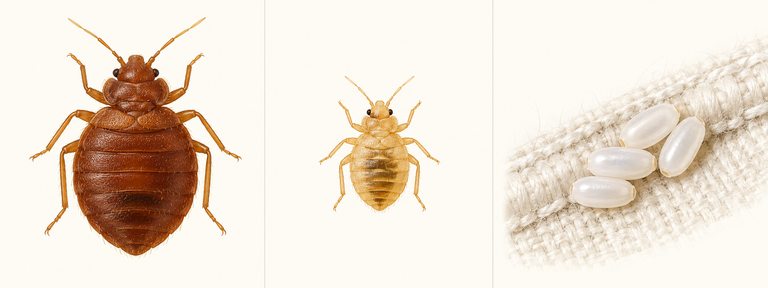
AdultNymphEggs and shells
AI-generated enlarged illustrations, not to scale. Actual appearances vary; these images cannot replace an on-site identification.
- Adults: Usually reddish brown, flat, and oval, roughly apple-seed sized and commonly about 5–7 mm long. They have six legs and two antennae, and do not fly or jump. After feeding they may look fuller and redder; colour alone does not identify them.
- Nymphs: Similar in shape but smaller and usually pale or translucent. A recently fed abdomen may look red. Not every tiny dark insect is a bed bug.
- Eggs and eggshells: Eggs are about 1 mm long, pale, and oval, and may be attached in sheltered seams. Tiny shells can be difficult to recognise; a flashlight and magnifier can help.
2. Look for spots, stains, and shed skins
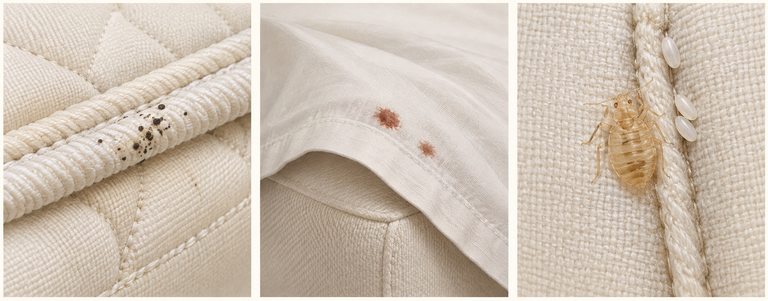
Dark spottingRusty stainsShed skin and eggs
AI-generated enlarged illustrations, not to scale. Actual appearances vary; these images cannot replace an on-site identification.
- Dark spots: Small dark marks near mattress piping, tags, sheet folds, or headboard joints may be fecal spotting. On fabric they can spread like ink. Dirt and other stains can look similar, so one spot is not proof.
- Rusty or reddish-brown stains: Dry reddish-brown stains on sheets or mattresses warrant a closer look but may have other causes. A bloodstain alone cannot identify a pest or confirm an infestation.
- Shed skins: Look for pale, translucent empty shells that may retain an oval body and leg outline. An insect, eggs, shed skins, and nearby marks together are reasons to ask staff for an inspection.
3. Check the hotel room in order
- Use a light and set luggage aside: Use a flashlight or phone light, with a magnifier if useful. Inspect the luggage rack before placing closed bags on it or a hard surface away from the bed. Avoid spreading belongings on beds or carpets.
- Sheets, pillowcases, and mattress: Lift accessible sheet edges gently. Look along folds, pillowcase seams, mattress corners, piping, and tags for insects, eggs, dark spots, or shed skins. Do not take the mattress apart.
- Headboard, frame, and nearby furniture: Look into visible headboard and bed-frame joints, bedside-table seams, and upholstered chair or sofa seams. Check accessible box-spring edges where present; do not dismantle hotel furniture or electrical fittings.
- Widen the check if needed: If you see a possible sign, look at nearby curtain folds, visible carpet and skirting edges, luggage racks, and wardrobe seams. Do not peel wallpaper, lift carpets, or open appliances; ask staff to arrange a closer inspection.
4. Understand limits and record what you find
- Bites and odour are not enough: Itching, rashes, and bites in clusters or lines can have other causes; some people show no visible reaction. A sweet musty smell is only a possible clue. Its presence or absence does not confirm or rule out bed bugs.
- Photos and comparison images have limits: Carpet beetles, booklice, and other small insects may be mistaken for bed bugs. Photograph details with a size reference and note the location. Ask an experienced pest professional if identification matters.
- Tell accommodation staff: Take a close-up and a wider photo showing the location, note the time, and ask the front desk to inspect. Keep bags closed and discuss room changes and moving belongings with staff. Hide names and booking numbers before sharing publicly.
Sources
- wikiHow: Identify a Bed Bug Infestation
- US EPA: How to Find Bed Bugs
- US EPA: Travelers Beware of Bed Bugs
- CDC DPDx: Bed Bugs
Adapted in our own words for hotel stays. Physical signs and identification limits were cross-checked against EPA and CDC guidance.